The Designer Trick for Making a Low Ceiling Look Higher (It’s Not What You Think)
Please note: This website contains affiliate links. As an Amazon Associate, we earn from qualifying purchases at no additional cost to you.
You don’t need a renovation. You don’t need to knock out walls or install skylights or do anything that requires a contractor and three weeks of your life.
Making a room feel taller is almost entirely about optical illusion — and once you know the tricks, you’ll never look at a room the same way again.
Here’s the thing: most people accidentally make their ceilings feel lower without realizing it. A few small, common choices quietly drag the eye downward, and the room ends up feeling smaller and heavier than it actually is. The good news? Every single one of those mistakes is fixable.
Let’s get into it.
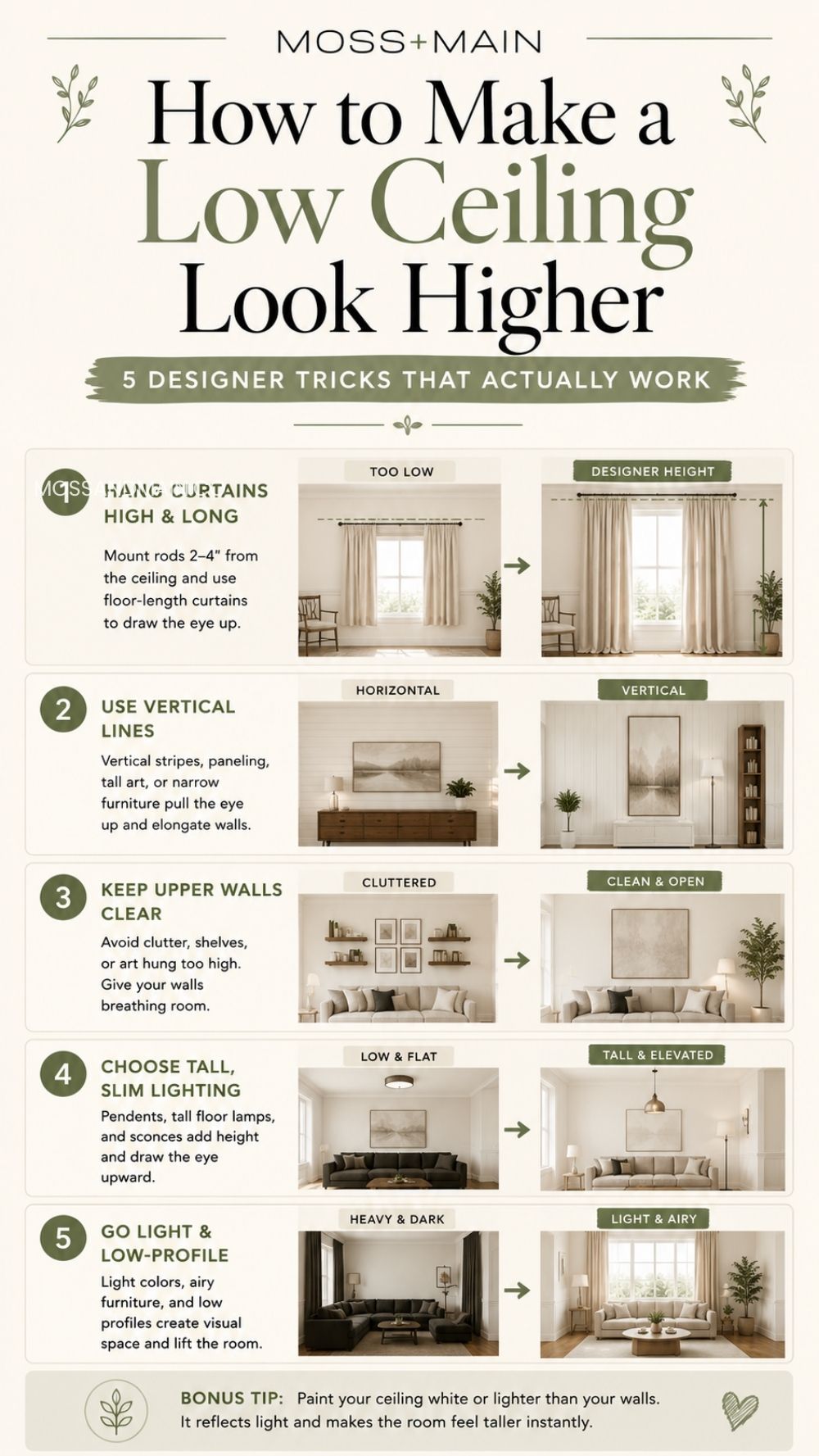
The #1 Designer Trick: Hang Your Curtains High (Like, Really High)
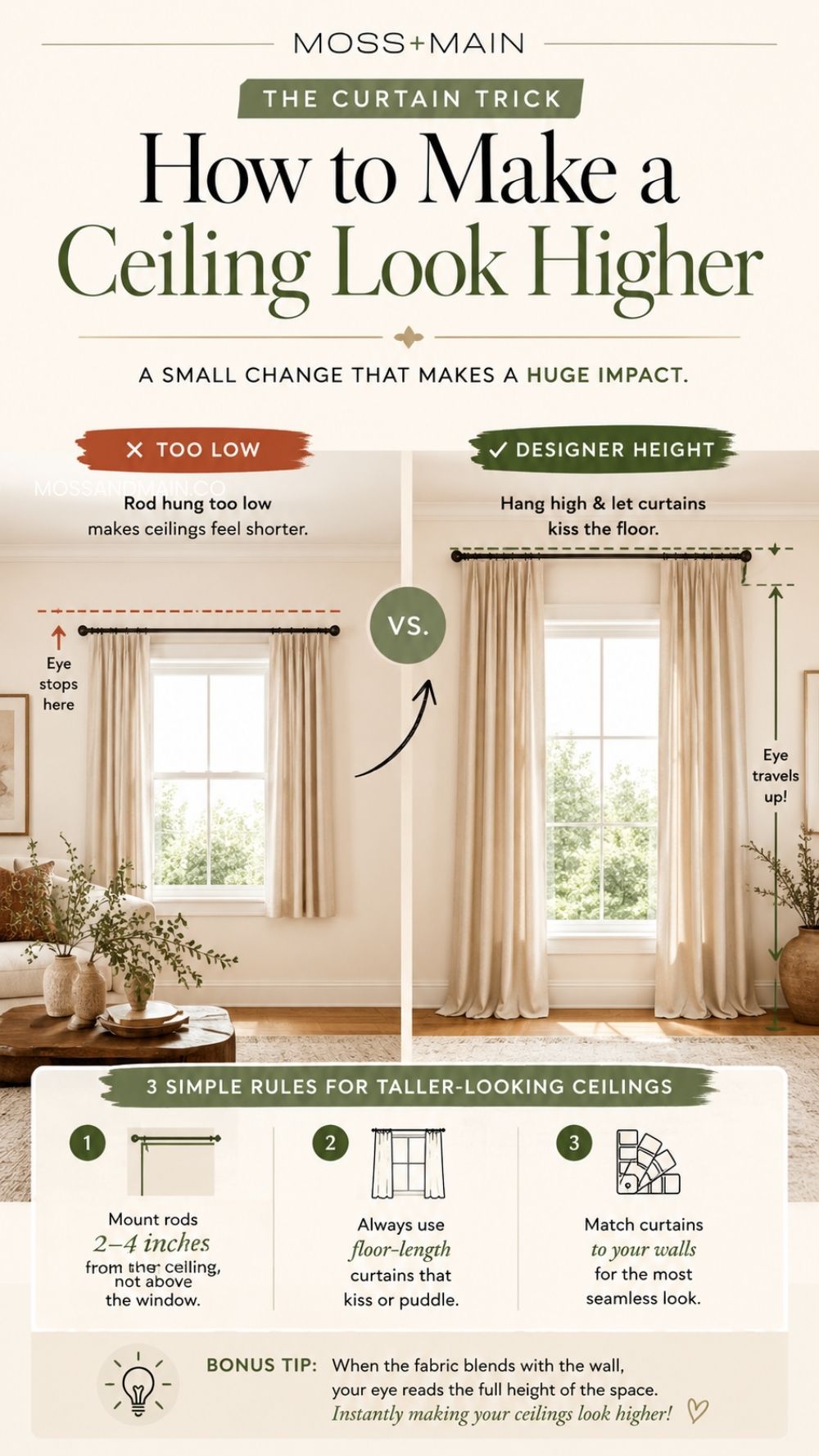
If you take nothing else from this article, take this: hang your curtain rods as close to the ceiling as possible, not just above the window frame.
Most people hang curtain rods 4–6 inches above the window. Designers hang them at the ceiling — or within 2–4 inches of it. Then they let the curtains fall all the way to the floor.
What this does is visually extend the wall upward. Your eye follows the fabric from floor to ceiling and reads the entire height of the wall, rather than stopping at the window frame. It’s one of the fastest, cheapest, most dramatic things you can do to a room, and it works in literally every space.
Bonus tip: Choose curtains that are the same color as or slightly lighter than your walls. When the fabric blends with the wall, the effect is even more seamless.
Paint Your Ceiling White — Or Lighter Than Your Walls
Dark ceilings close in. Light ceilings lift up. This isn’t complicated, but it’s worth saying because a lot of people either paint their ceiling the same color as the walls (which can actually work in some cases — more on that in a second) or, worse, they leave an old off-white ceiling next to freshly painted walls and wonder why the room feels dingy.
A bright, clean white ceiling creates contrast that naturally draws the eye upward. It also reflects light back into the room, which makes the whole space feel more open and airy.
When same-color ceilings actually work: In rooms with very high ceilings, painting the ceiling the same color as the walls (especially in a deep, moody shade) can create a cozy, enveloping feel on purpose. But in a standard 8-foot room? Stick with white or a very light tint.
Go Vertical Everywhere You Can
The direction your eye travels matters. Vertical lines pull the gaze upward; horizontal lines spread it sideways. So whenever you have a choice, go vertical.
This shows up in a lot of different ways:
- Striped wallpaper or paint: Vertical stripes on walls are one of the oldest ceiling tricks in the book, and they genuinely work. Even subtle, tone-on-tone stripes do the job.
- Tall, narrow furniture: A tall bookcase or a slender floor lamp draws the eye up. A wide, low credenza does the opposite.
- Artwork hung vertically: A tall, narrow piece of art — or a vertically stacked gallery wall — guides the eye upward rather than across.
- Paneling and molding: Vertical shiplap, board and batten, or applied wall paneling all create strong upward lines.
Keep the Upper Portion of Your Walls Clear
Here’s one people don’t think about: clutter at eye level or above makes rooms feel smaller. When the upper half of your walls are busy — too many floating shelves, art hung too high in a jumbled arrangement, or bulky crown molding painted the same color as the wall — it creates visual noise right where you want the eye to travel freely upward.
The cleaner the top portion of your walls, the taller the room will feel. This doesn’t mean the walls have to be bare — it just means being intentional about what goes up there and leaving breathing room.
Use Tall, Slim Light Fixtures
A statement floor lamp with a tall, skinny silhouette does double duty: it adds height to the room visually, and it draws the eye upward toward the ceiling. The same goes for pendant lights hung on longer cords — the cord itself creates a vertical line that extends the perceived height of the space.
Avoid wide, flat flush-mount ceiling fixtures in rooms where you’re trying to add height. They sit flat against the ceiling and actually emphasize how low it is. A pendant hung on even a short cord is almost always a better choice.
Avoid Furniture That’s Too Tall or Too Visually Heavy
This one sounds counterintuitive. Wouldn’t taller furniture make a room feel taller?
Not quite. Furniture that nearly reaches the ceiling actually highlights how little space there is between the top of the piece and the ceiling. It makes the ceiling feel like it’s pressing down. Furniture with visual breathing room above it — say, a bookcase that’s tall but still has a foot or two between it and the ceiling — actually reads better.
The same goes for visual weight. Heavy, dark, chunky furniture pulls the eye downward and makes the room feel denser. Lighter pieces — furniture with legs, open-backed shelving, lucite or glass elements — keep the visual field open and airy.
Choose a Low-Profile Bed (Yes, Really)
This one is especially relevant for bedrooms with lower ceilings — and it’s a tip that often surprises people. Platform beds and low-profile bed frames are genuinely one of the best tools you have for making a bedroom feel taller.
Here’s the logic: the lower the bed sits, the more wall you see above it. That expanse of open wall between the top of the mattress and the ceiling reads as height. A tall, imposing sleigh bed or a heavy upholstered frame with a towering headboard does the opposite — it fills the vertical space and makes the ceiling feel closer.
A platform bed paired with a simple, low headboard — or even no headboard at all — lets the wall do the work. Add a piece of large vertical art or an oversized mirror above it, and you’ve created a bedroom that feels significantly more open and airy without changing a single structural thing about the room.
Bonus: Low-profile beds tend to have a clean, modern aesthetic that photographs beautifully and feels very intentional, rather than just “we ran out of ceiling.”
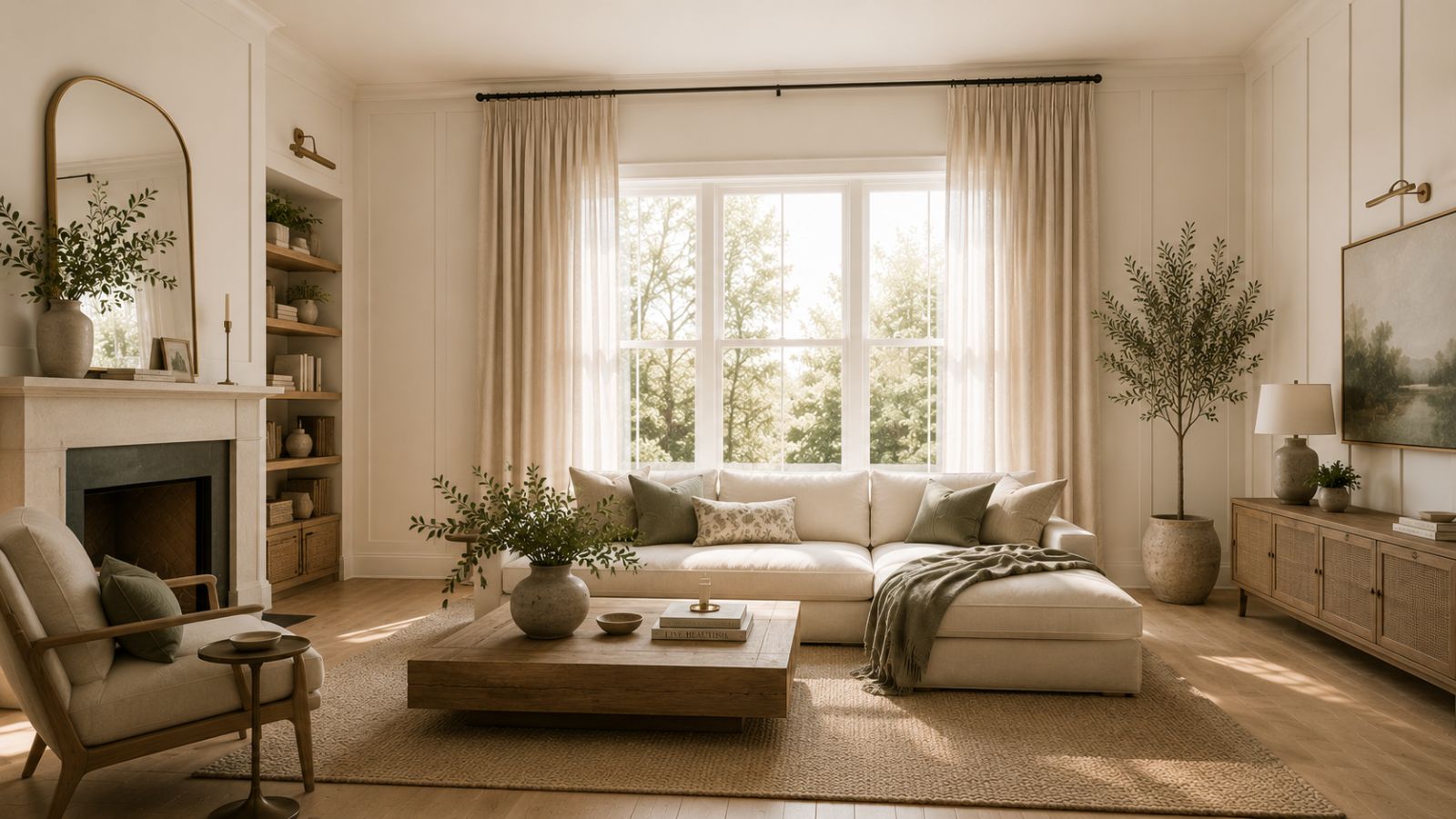
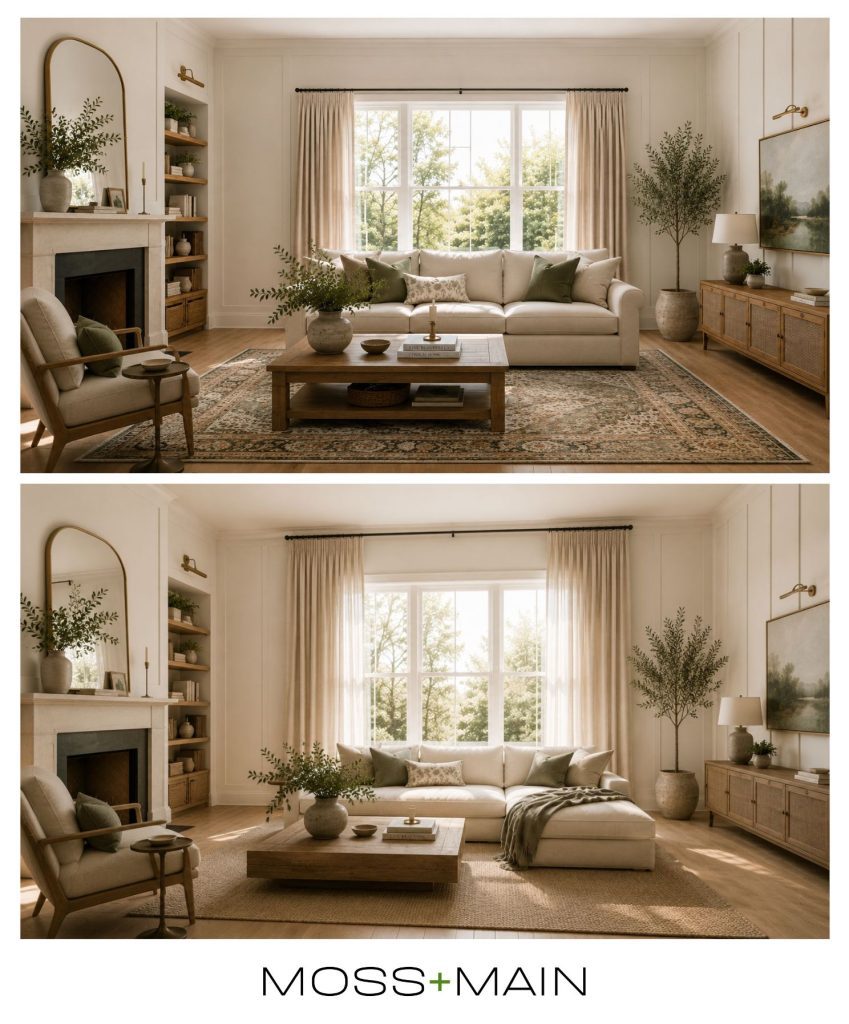
This trick works for living rooms too!
If you are trying to make your ceiling look higher in your living room, there are also low profile sofas, that just sit a little lower than average. In this example, the difference is subtle, but you’ll see that the sofa is lower, the curtain rods higher and the rug is a bit more neutral. It not only makes the ceilings look higher, it also makes the room feel a bit larger (IMHO).
Don’t Neglect the Floor
Sounds weird, but your flooring choice affects how tall your room feels. Here’s why: horizontal patterns (like wide-plank wood running across the room, or large square tiles) can make a room feel wider but shorter. Flooring that runs lengthwise down the room pulls the eye forward and creates a sense of depth that also helps with perceived height.
Similarly, keeping the floor relatively uncluttered — avoiding rugs that are too small, which visually chop up the space — helps the room feel more expansive overall.
The Secret Weapon: Color Drenching
Here’s the one that surprises people: in the right space, painting the walls, ceiling, and trim all the same color (or close to it) can actually make a room feel taller and more expansive. Designers call this color drenching — and it’s having a major moment right now for good reason.
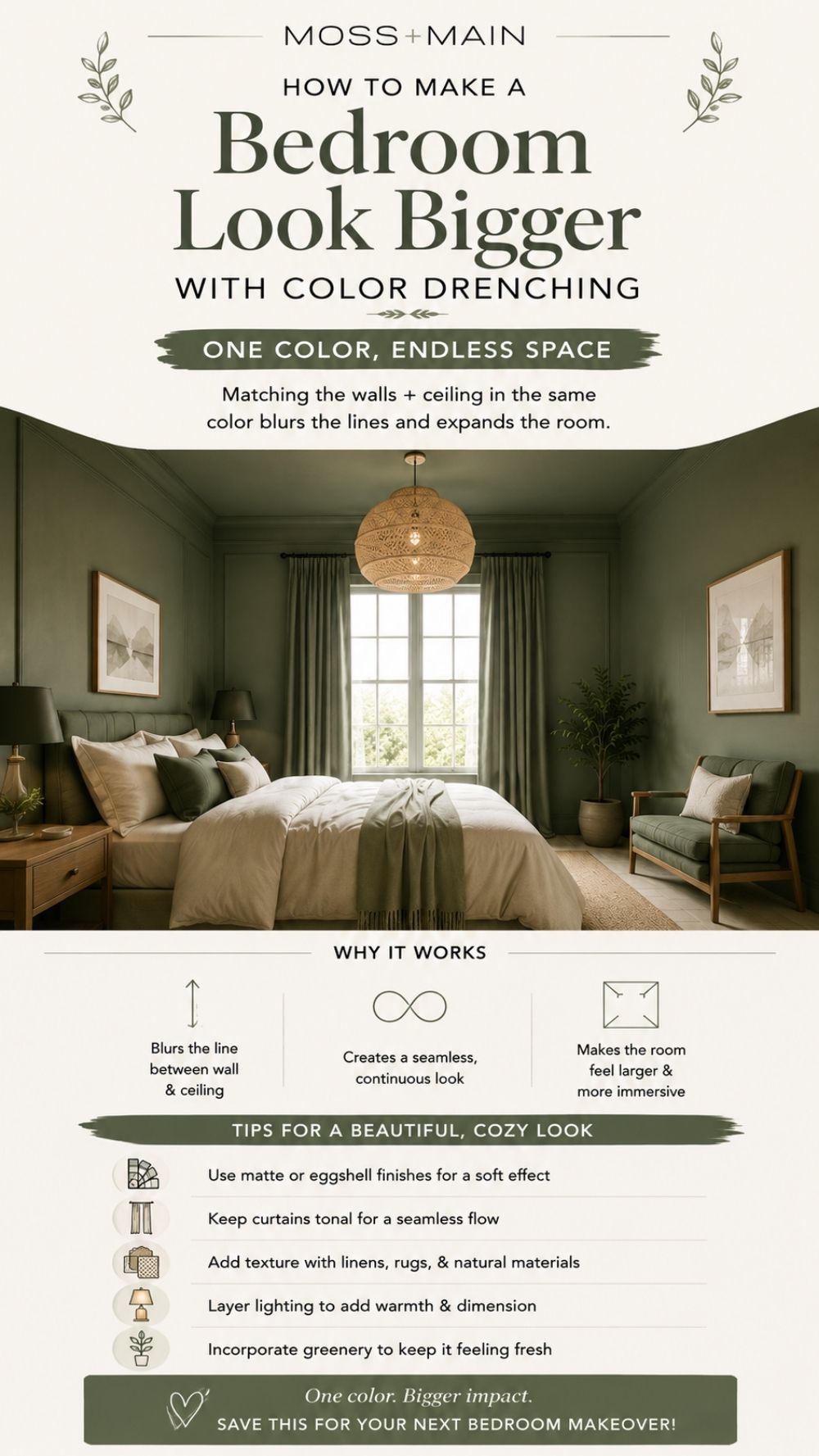
Why does it work? Because it eliminates the line where the wall meets the ceiling. That line — the contrast between wall color and ceiling color — is where your eye stops. Remove the contrast, and the eye just keeps traveling. The room feels continuous rather than capped.
Choose a soft, warm mid-tone — a warm greige, a dusty sage, a muted clay — and paint everything: walls, ceiling, trim, and even the window casings. The effect is surprisingly sophisticated and makes the room feel larger in a completely different way than the white-ceiling approach.
Want to go deeper on this technique? We have a full collection paint selection and color drenching guides to help you pull it off in every room:
- The Ultimate Guide to Color Drenching
- The Commitment-Phobe’s Guide to Color: How to Date Fun Color Schemes Before You Marry Them
- Designer Approved Color Palettes That Never Go Out of Style
Quick-Reference Checklist
Here’s the short version you can save and come back to:
✓ Hang curtain rods at or near the ceiling, curtains to the floor
✓ Use a white or light ceiling (or go full color drenching for a moody, seamless look)
✓ Choose vertical stripes, paneling, or wallpaper to draw the eye up
✓ Keep the upper portion of walls clean and uncluttered
✓ Use tall, slim light fixtures — floor lamps and hanging pendants
✓ Choose furniture with legs and visual lightness over heavy, chunky pieces
✓ In the bedroom, opt for a low-profile or platform bed
✓ Run flooring lengthwise when possible
✓ Try color drenching for a seamless, expansive wall-to-ceiling effect
Frequently Asked Questions
Does painting the ceiling the same color as the walls really make the room feel bigger?
It can, yes — but it works differently than a white ceiling. A white ceiling creates contrast that draws the eye upward. Color drenching (painting everything the same color) removes the visual boundary between wall and ceiling entirely, so the room feels continuous and uninterrupted. Both approaches work; they just create slightly different effects. White ceilings feel airy and bright; color drenching feels immersive and sophisticated.
What’s the best ceiling color to make a room feel taller?
Bright white is the classic choice — it reflects light and creates maximum contrast with the walls. If you want something warmer, look for whites with a slight warm undertone (like Chantilly Lace by Benjamin Moore or Swiss Coffee) rather than a stark, cool white, which can feel clinical. If you’re color drenching, the “ceiling color” is just a lighter version of your wall color — or the exact same shade.
Does a platform bed really make a bedroom feel bigger?
Yes, genuinely. Lower furniture creates more visual space between the top of the piece and the ceiling, which makes the ceiling feel further away. A platform bed or low-profile frame — especially paired with a simple or no headboard — gives the wall above the bed room to breathe, which reads as height. It’s one of the most underrated tricks for low-ceiling bedrooms specifically.
How high should curtain rods be hung?
As high as possible — ideally within 2–4 inches of the ceiling, or mounted directly to the ceiling. Then let the curtains fall all the way to the floor. The length of fabric from ceiling to floor is what creates the illusion of height. If your curtains are too short (hovering above the floor) or your rod is hung too low (just above the window frame), you’re losing most of the effect.
Does furniture size affect how tall a room feels?
Absolutely. Heavy, oversized, or very tall furniture that nearly touches the ceiling actually emphasizes how low the ceiling is. The sweet spot is furniture that’s proportional to the room with visible breathing room above it. Pieces with legs, open backs, or lighter materials (glass, lucite, natural wood) keep the visual field open and make the whole room feel less crowded — and therefore taller.
Can mirrors make ceilings feel higher?
Yes, strategically placed mirrors can help — but it matters how you use them. A tall, vertically oriented mirror (especially leaned against or hung on a wall) adds the illusion of depth and height. Mirrors hung horizontally or placed flat on a surface don’t do as much for ceiling height specifically. A large mirror above a low-profile bed or console table is particularly effective.
What flooring makes a room feel taller?
Flooring that runs lengthwise down the room (rather than across it) pulls the eye forward and creates a sense of depth that contributes to perceived height. Light-colored flooring also helps the space feel more open. Avoid very large area rugs that are too small for the space — an undersized rug visually chops up the floor and makes everything feel smaller.
The Bottom Line
You don’t need higher ceilings. You need your room to feel like it has higher ceilings — and that’s entirely achievable with the right choices. Start with the curtains. Seriously, just hang them higher. It’s the fastest, most dramatic change you can make, and once you do it, you’ll wonder why you ever hung them any other way.
The rest of the list you can tackle one piece at a time. Each change builds on the last, and before long you’ll have a room that feels open, airy, and — somehow — a lot bigger than the square footage suggests.
Looking for more designer tricks that don’t require a renovation? Browse the Moss & Main archives for more room-by-room guides.
SAVE THIS GUIDE FOR LATER!
Please note: This website contains affiliate links. As an Amazon Associate, we earn from qualifying purchases at no additional cost to you.