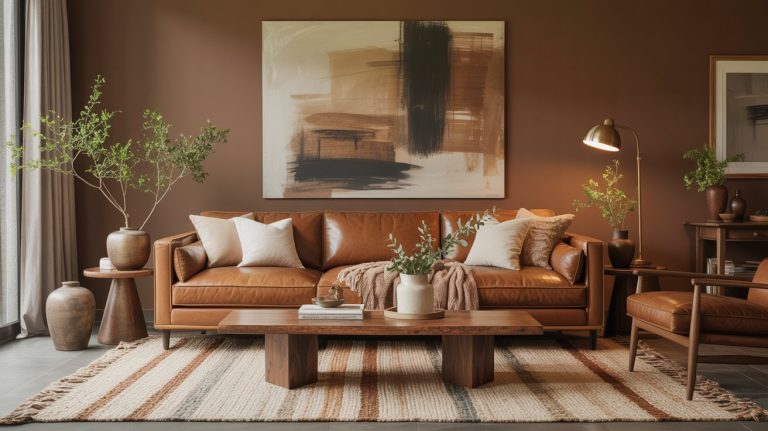

How to Style Couch Throw Pillows: The Designer Formula
Please note: This website contains affiliate links. As an Amazon Associate, we earn from qualifying purchases at no additional cost to you.
A sofa without pillows can feel a little… unfinished.
It’s the “bones” of your living room, but the pillows are the soul. However, as any home lover knows, styling them isn’t as simple as tossing a few cushions on the couch and hoping for the best.
The way your pillows are layered—the specific play between colors, the marriage of textures, and the variation in sizes—can completely shift the mood of your home. When styled thoughtfully, they make a sofa feel softer, more inviting, and beautifully layered.
The good news? You don’t need a professional designer to get the look right. By following a few simple, strategic guidelines, you can style your sofa in a way that feels intentional, balanced, and effortlessly beautiful.

Start with a Simple Pillow Formula
Professional designers rarely “wing it.” Instead, they follow a basic formula to ensure the arrangement looks balanced without feeling overly staged or cluttered.
For a standard sofa, the most reliable formula is:
- Two large base pillows in solid, neutral tones.
- Two medium pillows featuring a subtle pattern or a tactile texture.
- One smaller accent pillow in a warm, earthy “pop” color to act as the focal point.
This creates a look that feels layered and high-end. If you have a smaller loveseat, a trio of pillows (two large, one small) usually works best. For oversized sectionals, you can comfortably handle five to seven pillows spread across the corners and the “L” bend.
Use Different Pillow Sizes to Create Depth
One of the easiest ways to spot a professionally styled sofa is the variation in size. When every pillow is the same 18-inch square, the arrangement looks flat and “big box store.”
By layering larger pillows in the back and smaller ones in front, you create a sense of dimension that draws the eye in.
- The Foundation: Start with 22-inch pillows in the far corners to act as your anchors.
- The Layer: Add 20-inch pillows just inside or slightly in front of the anchors.
- The Finish: Place an 18-inch square or a 12×20 lumbar in the center or front-most layer.
This “stair-step” variation helps the eye move naturally across the sofa rather than getting stuck on one blocky shape.
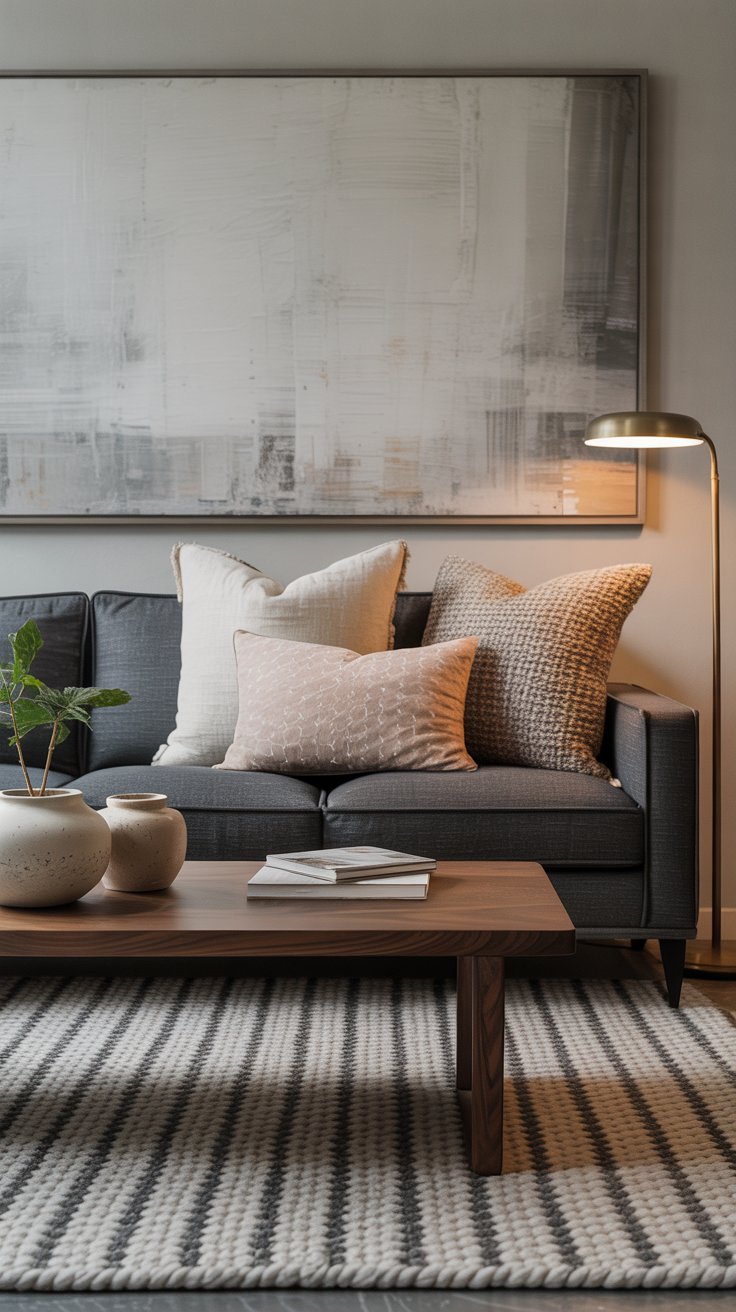
Mix Textures for a “Lived-In” Look
Texture is the secret weapon the cozy modern aesthetic. Instead of choosing pillows made from the identical fabric, you want to mix materials that offer a “high-low” contrast. This adds immediate visual interest and makes the room feel warmer.
Try combining two or three of these textures:
- Linen: For a breezy, organic base.
- Velvet: To add a hint of weight and “luxe” sheen.
- Bouclé or Chunky Knits: To bring in that cozy, tactile feel.
- Woven or Embroidered: For a touch of artisanal craftsmanship.
Even if you keep your colors strictly neutral, these contrasting fabrics make the arrangement feel rich and expensive.
Stick to a Cohesive Color Palette
Coordination is better than matching. To keep your sofa from looking chaotic, choose a small, cohesive color palette. Most designers stick to two neutral tones and one accent color.
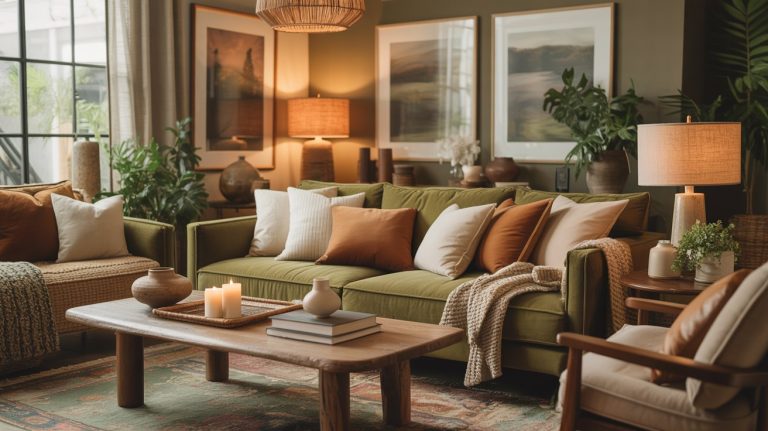
For a Moss & Main-inspired room, think about nature-inspired combinations:
- The Neutrals: Creams, warm beiges, or soft sands.
- The Accent: A “soul” color like rust, terracotta, or ochre.
- The Depth: A grounding tone like olive green or clay.
For an earthy living room, that might look like:
• Cream / warm beige pillows
• A rust or terracotta accent pillow with a subtle pattern
• Olive or deep brown textured pillow

For a coastal living room, this might look like:
• Creamy white or soft beige pillows
• A navy blue, teal or turquoise accent pillow with a subtle pattern
• A light blue or soft sage green textured pillow
These tones complement each other while still adding warmth and depth.
Add One Pattern for Interest
Patterns bring personality, but they work best when they aren’t competing for attention.
If every pillow has a bold print, the room starts to feel loud. Instead, follow the “One Pattern” rule. Pair your solid and textured pillows with one or two patterned pieces in the same color family. Look for:
- Block prints for a vintage, global feel.
- Soft pinstripes for a classic, tailored touch.
- Woven geometrics for a modern edge.
These patterns add interest without overpowering the room.
Keep the Arrangement Relaxed
A common mistake is striving for perfect symmetry. While that works in very formal rooms, a cozy home feels better when the pillows look slightly relaxed.
Don’t be afraid to let pillows lean against each other or overlap significantly. The goal is a comfortable, “come sit down” look rather than a rigid display.
Scale Your Strategy to Your Sofa
Size matters when it comes to the “pillow count.” Here is a quick reference guide:
- Standard Sofa: 3 to 5 pillows.
- Large Sectional: 5 to 7 pillows (group them in the corners and the middle).
- Small Loveseat: 2 to 3 pillows is the sweet spot.
- Single Accent Chair: 1 lumbar or 1 medium square or round pillow is all you need.

The Secret is in the Insert
You can have the most beautiful cover in the world, but if the insert is flat, the pillow will look cheap.
The Pro Rule: Always use an insert that is one size larger than your cover. For a 20×20 cover, use a 22×22 insert. This ensures the corners are plump and the pillow looks high-end.
Additionally, opt for feather or down-alternative inserts. They allow for that iconic “designer chop” (the little indent in the top) and they hold their shape significantly better than standard polyester fill.
Final Thoughts
Styling your sofa is one of the most rewarding ways to finish a room. By mixing your sizes, leaning into textures, and sticking to a grounded color palette, you create a space that feels intentional and curated.
Start with your neutral base, add your textured layers, and introduce one warm accent. It’s a simple formula, but the result is a living room that finally feels like home.

Please note: This website contains affiliate links. As an Amazon Associate, we earn from qualifying purchases at no additional cost to you.